The whole information to how we use a NAS backup workflow to guard our photographs and movies, and what system we use.
FULL DISCLOSURE: Synology and Seagate supplied us the NAS system and exhausting drives in an effort to enhance our workflow and discuss our outcomes with our viewers. They didn’t pay us to advertise them, they usually have had no management or enter over the content material on this article. All ideas, opinions and our new workflow are fully our personal.
Again in 2014 we purchased ourselves a little bit point-and-shoot digital camera to doc our most bold journey up to now: Travelling from Thailand to South Africa with out flying.
We knew nothing about pictures, however over time it began to show right into a little bit of a passion of ours. From a passion it was a ardour, and shortly sufficient from a ardour right into a job.
Quick ahead to 2019 and we now work as skilled journey photographers, and have over 50 terabytes of photographs and movies from greater than 70 nations in our digital media assortment.
Over time the necessity to hold this digital media secure has develop into an ever-growing concern for us, particularly as we tackle increasingly more purchasers who contract us for creating photographs and movies.
Past the work side, these photos and movies are additionally our reminiscences of journey, holding moments in time the place we’ve met unbelievable folks, explored outstanding areas and achieved unbelievable feats.
To lose this could be tragic not only for our enterprise, however for private causes as nicely.
However regardless that we realise simply how useful our digital media is, it isn’t till very just lately that we truly established a correct workflow to again these up utilizing a NAS backup system.
As we speak we wish to share with you what we used to do, and what we do now, to professionally again up our photographs and movies.
READ MORE – Take a look at our detailed information for the greatest journey pictures ideas.
How We Backup Pictures – From No Technique to Professional Workflow
After we took our first journey to Antarctica in 2017, we captured over 2TB of photographs and movies in 11 days. That’s quite a lot of footage.
There’s two causes we took shot and filmed a lot. The primary was that it was Antarctica, a spot so stunning that phrases don’t do it justice.
The second is that it was a piece journey, and we had been making an attempt to get the perfect content material potential for our consumer. And as such this digital media was extraordinarily necessary for all events concerned.
Dropping it wasn’t an possibility.
Sadly we’re additionally full-time travellers, and after we disembarked from the ship in Ushuaia, we spent the following 4 months wandering round Patagonia and the remainder of Chile, with two exhausting drives full of our most respected content material ever.
Importing it to the cloud wasn’t an possibility. Web was barely adequate to publish a photograph to Instagram half the time, so making an attempt to place 4K video footage and 1000’s of RAW recordsdata right into a cloud storage system would by no means have labored.
If we had have misplaced these exhausting drives, had them stolen, or if they simply grew to become corrupted, we’d have had quite a lot of explaining to do to our consumer…
Fortunately nothing occurred, and once we lastly settled into an AirBnB for a few weeks with a strong web connection we managed to get crucial media into the cloud.
Ever since then although we’ve realised that our workflow of backing up photographs and movies was simply horrendous, and it’s been a sluggish journey looking for the right technique.
Lastly, after years of trial and error, we have now it discovered, and with our NAS storage for house and a redundant backup resolution we’re feeling assured with our media.
We’ll be the primary to confess that our previous workflow of backing up photographs was fairly dangerous to say the least.
Right here’s what we used to do:

First, Take a Million Pictures and Movies
We aren’t very conservative relating to the variety of photographs and movies we seize.
With two of us strolling round with full-frame cameras round our necks capturing in RAW, a GoPro every videoing 4K footage and our telephones taking fast pics and movies for social media, it’s not unparalleled for us to finish up with over 100gb of footage in a single single day.
Particularly if we’re on an task someplace stunning like South Georgia, our cameras are always firing, and we’re all the time filling up SD playing cards.
After we crammed one up, we’d put it into our digital camera bag and exchange it with an empty one, then repeat the method.
Again As much as a USB Onerous Drive
As soon as we crammed up all of our SD playing cards (which might take anyplace from a day to every week, relying on the place we’re), we’d lastly empty them onto a transportable USB exhausting drive.
NOTE – We used to make use of WD MyPassport 4TB exhausting drives, however we have now now switched to LaCie Rugged 4TB exhausting drives
Usually we’d be drained or in a rush to exit for dinner or do some extra capturing, so this could be a quick-and-dirty technique.
Our organisation wasn’t too dangerous (we’d have two exhausting drives, one for photograph and one for video, and we’d kind the folders out like this: Nation > Metropolis > Day), however it could fairly actually simply be a duplicate and paste affair. This meant we’d find yourself with lots of of 1000’s of recordsdata known as DSC*******, the place the celebrities are only a quantity sequence.
After we had the content material backed up, we’d then format the SD card in-camera, prepared for the following full day of capturing.

Edit
If we had a while we’d edit a few photographs for social media, export them at 2048 pixels extensive to the laptop computer, then share them on-line.
We wouldn’t undergo each photograph although. It will simply be a fast edit of the one or two photographs that we thought had been the perfect from that day, then we’d transfer on with our life.
Every so often we’d sit down to write down a weblog publish, or put collectively a group for a consumer, and solely then would we return and discover the photographs that we’d want for that individual activity.
We’d edit and export them at low-res, importing to them to this web site, or high-res and attempt to get them to the cloud.
Automated Dropbox Sync for Edited Pictures
That is fairly actually the one time we uploaded something to the cloud, resulting from all the time having crappy web wherever we travelled.
Our folder of edited photographs on the laptop computer had an auto-sync to Dropbox related. Each time we ended up someplace with a good web connection, we’d sync the folder to Dropbox.
All of our different RAW recordsdata and video clips although would proceed to dwell on the exhausting drive without end.
Consumer Media
If we had a lot of photographs or movies we’d should ship to a consumer, we’d edit these by the deadline then add them to a shared folder on Dropbox. However that was the extent of our cloud storage options.
Pray
After the photographs had been backed as much as an exterior exhausting drive, then we might actually repeat the method each day or week, praying that the drives didn’t fail us or get stolen.
We’d journey around the globe, taking photographs, capturing movies, and simply amassing transportable exhausting drives. These would replenish, then we’d purchase one other one, stashing the complete drive into certainly one of our day packs.
We hardly ever made double copies of any digital media, except it was a very necessary shoot for a consumer. However even then we’d simply have the identical content material on two exhausting drives, or make a folder of ‘greatest photographs’ that lived with us always.
This wouldn’t be an enormous situation if we solely travelled for every week at a time. However that’s not how we journey. For almost 5 years we had been utterly nomadic, transferring round between totally different nations with simply the gear on our backs, gathering increasingly more exhausting drives.
READ MORE – Don’t miss our listing of the greatest journey cameras for any finances.
Going Dwelling – Bulk Backup
Every so often we’d come again to Australia to see household, and once we did we might exit and purchase a few bigger desktop exhausting drives, with capacities round 6TB or 8TB.
We’d take our transportable exhausting drives and duplicate all the media straight throughout to those new bigger desktop drives. Then we might take that huge drive, put it right into a drawer at a member of the family’s home, and go travelling once more.
Afterwards we’d do certainly one of two issues with our full transportable exhausting drives – we’d both retire them, inserting them in a drawer stuffed with no matter media was already on there, or we’d take them with us on the highway if we thought we’d want the media from a selected vacation spot sooner or later (if we wished to write down a weblog publish sooner or later for instance).
That is just about how we operated for years, and we all know we had been playing with our content material your entire time. If a tough drive obtained corrupted or stolen whereas we had been on the highway, all of these photos and video can be gone without end.
If any person contacted us and wished to purchase a high-resolution photograph from a number of years again, we simply needed to apologise and say we didn’t have entry to it. This occurred manner too many instances, costing us enterprise.
We put this horrible workflow down to 3 elements:
- We had been all the time travelling
- We hardly ever had good web
- We didn’t know any higher
Fortunately this workflow is a factor of the previous, and we’ve now improved our methods with a NAS backup to make sure we’re not playing with our media.

Enhancing Our Workflow – Introduction of a NAS Backup System
This has all modified in 2019 as we lastly step up our horrible technique of backing up and introduce an expert workflow, doing every thing we are able to to make sure we are able to’t lose our media, and so we are able to have entry to it always from anyplace on the earth.
The very very first thing we did was introduce a NAS (Community Entry Storage) backup system into our workflow. In case you don’t know what that is, don’t fear – we didn’t have a clue both till we began closely researching the best way to greatest again up our photographs.
With out getting too technical, mainly a NAS is a sequence of exhausting drives positioned in a single unit, working collectively and related to a community. These are often called RAIDs, or Redundant Array of Cheap Disks.
This whole system of drives can then be accessed on your own home or workplace community, or when you’ve got it related to an web router, accessed on-line as nicely.
Sounds fancy, and maybe it’s in comparison with how we used to work, however by way of information storage it’s truly fairly customary, and plenty of enormous workplaces use comparable setups on a bigger scale.
Think about having your whole photographs and movies you’ve ever taken sitting on a number of large exhausting drives at house, after which with the ability to entry these exhausting drives when you’re abroad as in the event that they had been plugged instantly into your laptop computer.
That’s mainly how we have a look at our NAS unit.
We now have our NAS put in at our grandparent’s home in Sydney, Australia. That is the place we quickly name house every time we’re again within the nation, and as of this 12 months it lastly has a secure web connection (web in Australia has all the time been at midnight ages).
A NAS is made up of two elements – the unit itself, and the exhausting drives that set up inside it. You may’t have one with out the opposite.
These are the manufacturers and fashions that we use in our NAS photograph backup system.
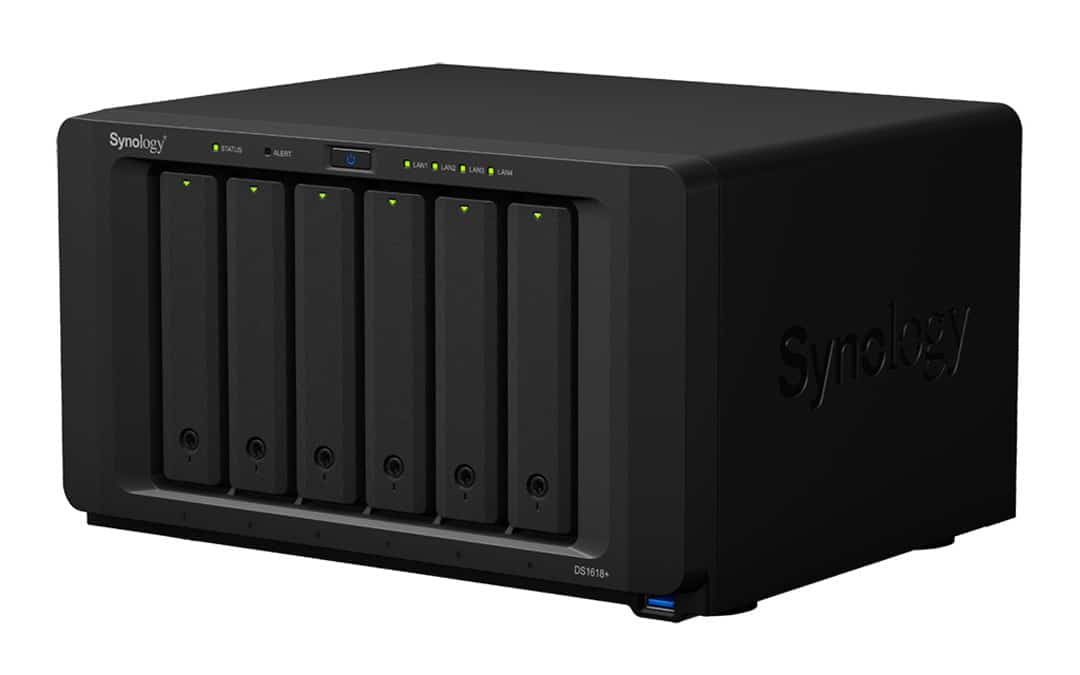
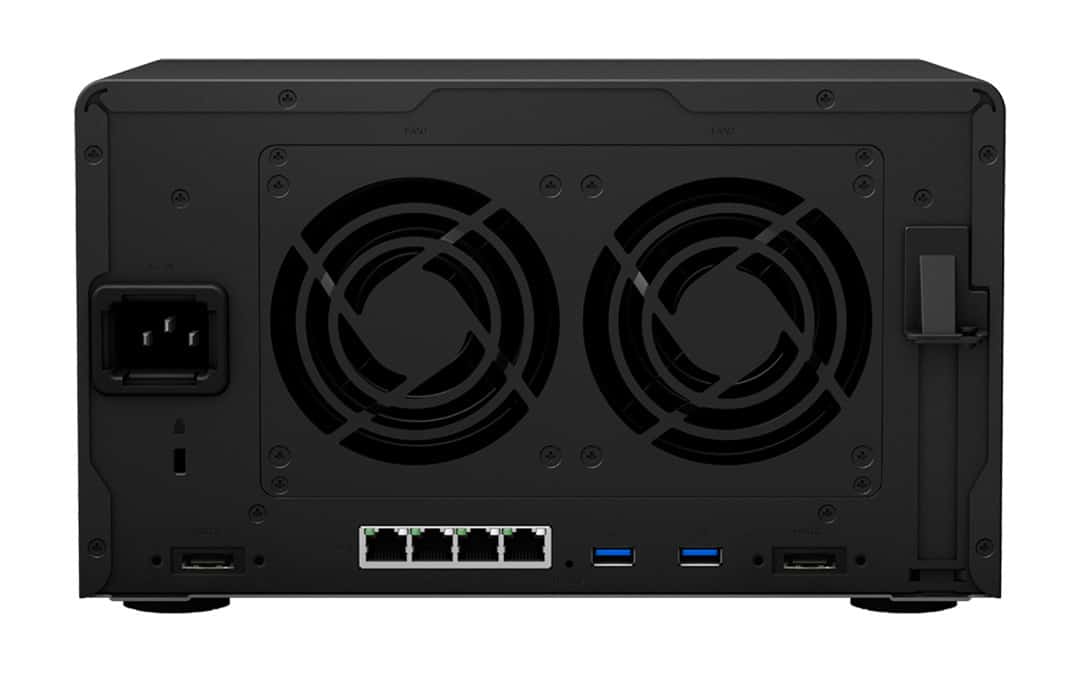
Synology DS1618+ NAS
The model and mannequin of NAS we use is a Synology DS1618+. Synology are probably the greatest makers of NAS methods on the earth, with prime quality merchandise and a improbable assist group in place, so if we ever have any questions, we are able to get a solution virtually instantly.
Additionally they have years of analysis and improvement behind them, and have always been innovating the trade at a shopper degree, so we all know that their merchandise are as much as scratch.
The DS1618+ is a 6-bay NAS, which means we are able to set up 6 exhausting drives into it. It may additionally join on to the web utilizing an ethernet cable.
As soon as it’s all arrange and related, which does take a number of hours intially, we are able to entry the precise NAS by utilizing Synology’s person interface, which might be completed by means of the community perform on our computer systems, or remotely utilizing a devoted and password-secured IP deal with and login.
The place this Synology system actually stands out for us although is the usage of their nice software program and purposes, permitting us to work together, monitor and management the NAS with no need to know any technical expertise.
These do issues like routinely sync the media on our NAS to our cloud storage of selection, lets us rearrange all of our recordsdata, monitor its well being, share folders with purchasers and even entry recordsdata from our telephones.
It additionally has a bunch of technical options, similar to quad-core CPUs, 4GB of RAM (expandable as much as 32GB), non-compulsory SSD cache, the likelihood to put in a 10gbE community card, and so forth.
However we’ll be trustworthy, most of this goes straight over our heads. All we care about is that if it really works nicely and improves our skilled pictures workflow. And it positively does.
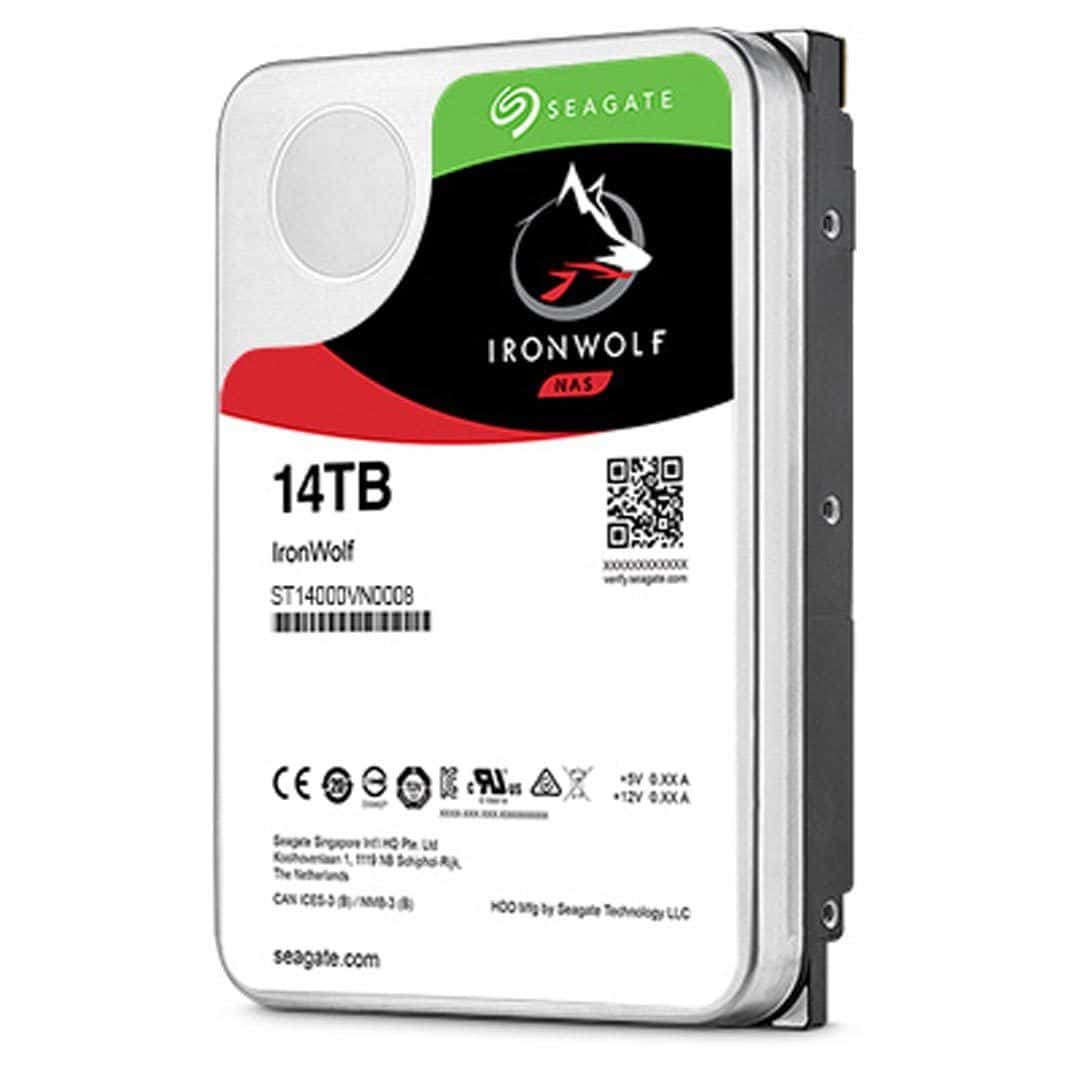
Seagate IronWolf 6TB NAS Onerous Drives
The Synology DS1618+ is the unit that we set up the exhausting drives into, nevertheless it doesn’t include the exhausting drives themselves. We needed to get these individually.
After chatting on to the group at Synology they really useful Seagate IronWolf exhausting drives. We checked out the opinions they usually positively appeared like the most suitable choice.
We ended up getting 6x Seagate IronWolf 6TB NAS exhausting drives to put in into our system. This could give us a complete of 36TB of storage in a primary RAID setup.
Nonetheless we didn’t use a primary setup. After some extra analysis and suggestions from the 2 groups at Synology and Seagate, we ended up utilizing a double-drive-redundancy setup.
Mainly what this implies is 4 exhausting drives are in regular use, whereas the opposite two are used as spare backup drives.
As a result of the Synology DS1618+ is continually monitoring the well being of each the system and the exhausting drives, it could immediately decide up if one thing appears to be going improper, similar to a tough drive malfunctioning.
If it picks up {that a} drive is beginning to play up, it routinely begins copying over all the contents of that drive to one of many spare ones. When it’s completed, it deactivates the defective drive so we are able to take it out and exchange it, holding every thing secure on the spare drive.
The double-drive-redundancy provides an additional spare drive in case one thing goes improper earlier than we get an opportunity to interchange the defective drive, or if one other drive fails whereas one is backing as much as the opposite.
It would look like overkill, however the factor is it’s not a matter of if a tough drive fails, however when. Plus with our work schedule seeing us all the time abroad, the possibilities of one drive failing whereas we’re someplace distant like Central Asia is fairly excessive.
After years or working the gauntlet, we don’t wish to take any extra probabilities.
How We Backup Pictures Now – A Skilled Photographer’s Workflow
Now that we have now a NAS system arrange in our house workplace, we have now made it a degree to make our workflow as skilled, seamless and superior as potential. It took a little bit of apply and self-discipline, however we’ve lastly managed to attain this.
Copying and Importing Utilizing Adobe Lightroom
We nonetheless take 1,000,000 photographs and movies, however now we’ve made it a degree to correctly again these up at each probability we get with up to date organisational instruments.
The primary change we’ve made is we now again up our SD playing cards to 2 separate exhausting drives the second we get again to our laptops, even when it’s between shoots.
No extra ready till we’ve run out of SD playing cards to lastly again them up!
For our photographs we now organise and import them to exterior exhausting drives by means of Adobe Lightroom. Right here’s how.
Buy the Inventive Cloud Suite of Adobe merchandise, together with Lightroom and Photoshop, right here.
First we open up the import software on Lightroom, select ‘Copy’, and verify all of the photographs. We’ll then undergo every photograph tremendous shortly and uncheck any photographs which might be clearly ineffective (out of focus, dangerous composition, and so forth).
On a full 64gb card capturing that’s about 1500 compressed RAW photographs from our Sony A7Riii, however going by means of all of them takes lower than 10 minutes. That’s how briskly we transfer.
Keep in mind, that is the import and backup stage, not the modifying stage.
Then we alter the listing that it’s getting copied to in the identical manner we all the time have completed. That’s instantly onto a tough drive, utilizing the folder construction: Nation > Metropolis > Exercise or Day.
In fact that folder construction will likely be totally different for everyone. We’re full-time journey photographers, so having every thing sorted by nations and cities works for us, however do no matter feels greatest to you.
Subsequent we select the choice to rename our recordsdata to one thing apparent from that individual shoot. We do that with ‘Customized Identify – Sequence’. That manner we aren’t left with 1000’s of DSC recordsdata adopted by random numbers.
For instance we’d change the file identify to: “Proper Whale Bay A7Riii – 1”, with the 1 being the sequence quantity. We additionally add within the digital camera that it was shot on, as we at the moment use a Sony A7iii and a Sony A7Riii.
As well as we add it them to a group (often the primary vacation spot we’re in, similar to South Georgia) and add key phrases to make trying to find photographs faster and simpler within the Lightroom Catalogue.
There’s additionally an possibility so as to add photographs to a subfolder utilizing dates within the ‘Vacation spot’ tab of Lightroom’s import function, however we don’t all the time use this except we really feel it’s necessary.
Hit import, and all the pictures will copy over to the brand new exhausting drive.
As soon as it’s all backed up, we then plug in one other exhausting drive and duplicate these image folders instantly throughout from the primary exhausting drive to the second. This manner we have now a precise duplicate of every thing we’ve simply captured.
Lastly we double verify that each exhausting drives have the identical content material because the SD card, and we do that by evaluating folder dimension and ensuring the numbers match precisely. Then it’s time to format the playing cards and prepare to shoot once more.
Movies
You should utilize the identical manner of copying and importing movies out of your SD card to your exhausting drive utilizing Lightroom, however we at the moment don’t use this as we don’t like having movies in our Lightroom catalogue.
As an alternative we copy these from the SD playing cards into folders utilizing the identical construction, however with the mother or father listing being ‘Video’.

Backing As much as the NAS
This stage utterly will depend on whether or not or not we’re someplace with respectable web. If we’re someplace like Patagonia or Central Asia, this isn’t seemingly. But when we’re in an enormous metropolis staying in an AirBnB with nice web, we then observe this step.
At evening earlier than we go to mattress we hook up with our Synology NAS system utilizing their distant connection technique. Then we open up the File Station utility.
We plug in our primary transportable exhausting drive, then actually drag and drop the latest backup folders throughout to the File Station app.
We now have our NAS folder construction the very same as we again up on our transportable exhausting drives, so it’s straightforward for us to navigate.
Now it’s a matter of ready, and that is the place having a great web connection is necessary. If we’re someplace with quick web, the folders which were dragged throughout to the File Station will now start importing to the NAS remotely.
That is our third type of file backup, and this fashion if something occurs to 1 (or each) of our exhausting drives whereas we’re travelling, the recordsdata are actually on our Synology NAS DS1618+ again in Sydney, which might be accessed remotely.
It’s necessary to notice right here that this actually does rely on web connection, so earlier than we start this we all the time do an web pace take a look at to see if it’s one thing we are able to even handle.
READ MORE: We’re rushing up our course of now by including a transportable exterior monitor to our workflow. Take a look at our evaluation of the Espresso Show to see what we predict.
Coming Dwelling – The Closing Backup
As soon as we’re again from a visit we head again to our momentary base in Sydney and join our laptops to our house community, the place the Synology NAS system resides.
We will simply entry the NAS utilizing Finder on our Macbooks. From right here we plugin our exterior exhausting drives into our laptop computer, then copy and paste (drag and drop) the folders of latest media from our final journey onto the NAS.
The NAS additionally has a number of different apps like USB Copy which lets you plug the exhausting drive instantly into the NAS and arrange an import, however we’ve had points with this so don’t hassle doing it that manner.
Our web connection at house is sort of quick for Australian requirements (95mbps obtain, 35mbps add), so importing the recordsdata to the NAS occurs surprisingly fast.
One necessary observe – we don’t copy your entire mother or father folder over in a single go. We’ll do it little by little, solely importing one folder at a time, simply in case one thing occurs like we have now an influence outage or the community drops out.

Syncing to the Cloud
Now for the cream on high! The Synology NAS DS1618+ has an amazing utility known as Cloud Sync. You put in it onto the NAS, then as soon as it’s all arrange you’ll be able to routinely sync whichever folders you’d wish to your favorite cloud storage resolution.
For us personally we have now limitless cloud storage with Google Drive and G Suite, so we have now our NAS synced with that.
When you begin the sync it routinely uploads your recordsdata and folders to the cloud so long as it’s related to the web, which for us is 24/7 at house.
Now every thing on the NAS is duplicated on Google Drive, which we are able to additionally entry from anyplace on the earth.
This step can also be essential to us, as a result of on the finish of the day, one thing might occur to the NAS (home will get flooded, somebody breaks in and steals it, and so forth), and in that case all of our media would nonetheless be gone regardless of our greatest efforts to backup.
By having them within the cloud on Google Drive, utilizing the identical folder construction we all know and love, there’s even much less probability of that occuring.
Now that we have now all of our media backed up on the NAS, and likewise synced to Google Drive, we take our two exhausting drives that we journey with and format them, able to go on the following pictures journey.
And that’s how we now professionally backup all of our photographs and movies!
Execs of This Workflow
We’re so glad that we lastly have this workflow for backing up our photographs and movies in our lives now. It’s taken away the stress we used to have of holding our digital media secure.
We realise it’s not good, and there’s nonetheless some parts we are able to advantageous tune to make it rock strong, however for now we’re very glad.
Right here’s what we take into account among the advantages of utilizing the Synology DS1618+ NAS system and Seagate exhausting drives:
- Organisation: Now that we have now a devoted workflow it retains all of our media clear and organised, making it simpler to search out in case a consumer wants entry to a few of our recordsdata (like if we promote a picture).
- Redundancy: The Synology NAS system makes use of a redundancy drive in order that if one of many different exhausting drives fail, it’ll routinely get better and backup the pictures onto the spare drive. That is golden!
- Cloud Sync: The NAS routinely syncs all of our recordsdata to the cloud 24/7. Always remember to do it!
- Helpful Purposes: The Synology DS1618+ has an amazing assortment of purposes put in on the system, making entry to our media painless.
Cons of this Workflow
Now in fact it isn’t all roses, and there are few adverse facets of this workflow.
- Plenty of Steps: This actually will depend on what you take into account ‘plenty of steps’, however in an effort to backup our digital media correctly we do have an inventory that we have to observe in a sure order. As soon as it’s been learnt although, it’s straightforward, however it could take a number of instances to get within the rhythm of issues.
- Outdated Media Isn’t Organised Correctly: We might all the time return and reimport/backup our previous photographs and movies utilizing our new organisation system in Lightroom, however this could take quite a lot of time that we simply don’t have. For now we’re simply coping with our previous file and folder construction on the NAS from earlier years.
- Want Good Web to Entry Remotely: Not simply at your own home base the place the NAS is related, but in addition whenever you journey if you wish to add recordsdata on the highway or obtain some from the NAS. In fact you’ll be able to nonetheless use a NAS with out a tremendous web connection identical to any exhausting drive backup resolution, and it’s far more safe than desktop exhausting drives.
- Too Sluggish to Work Instantly From the NAS: This may simply be the best way we have now our community setup, however for the time being we haven’t discovered a quick option to work instantly with recordsdata from the NAS. For instance if we wish to edit a video on Adobe Premier, we have to copy the recordsdata over to a transportable SSD drive quite than entry them from the NAS. Fortunately it’s fast and straightforward to repeat them over.

Closing Ideas – Is the NAS Backup System Value It?
A NAS system is an enormous funding, and relying on which manner you go it could price anyplace from $1000 as much as $3000 or extra. It’s not an inexpensive backup resolution.
Nonetheless for those who work as an expert photographer or videographer, or use enormous quantities of digital media in your life or enterprise, then the safety of getting your recordsdata secure on this method is invaluable.
Even for those who’re a hobbyist who loves pictures or videography, a NAS system is a superb software to have in your workflow to guard the content material you shoot.
That being stated, they’re not for everyone.
In case you are a newbie photographer or don’t seize quite a lot of content material, your cash can be higher spent simply shopping for two transportable USB exhausting drives and backing up your media on there.
For us, as those that seize quite a lot of content material and make a dwelling from doing so, a NAS system is now one thing we couldn’t think about not having in our pictures instruments.
After we replenish the present system, we’ll exit and purchase one other one, that’s how a lot we adore it.